Emergency training sessions
L'urgence au plus près de votre quotidien.
Two hours that matter, for you and for those around you.
A few sessions a month and one location a day, in France and the French-speaking world.
Hello,
You run a company or look after a family, and often both. What matters to you is that everything is planned and anticipated. I would like to address what cannot be, those long minutes before help arrives.
Who is writing to you
Emergency care is my profession.
My name is Julien Brichet, a Master's-level nurse anaesthetist. Emergency care is my profession, from the everyday to the most serious, at every age. I have taught it for several years to healthcare professionals, first with the SAMU, the French emergency medical service, then in private clinics and for a major group of Paris pharmacies. I answer every question, whatever the subject. Through Private Emergency Sessions, I now bring this expertise to business leaders, their teams and their families.
The session
Everyone practises. Until it is right.
A session means at least two hours of theory and hands-on practice, in private and in a small group, at your home or at the place you choose. Everyone practises on a connected manikin that shows in real time whether the technique is right, working from situations drawn from their own daily life.
The programme is bespoke and follows the most recent recommendations. It can cover life-threatening emergencies, such as cardiac arrest, drowning or choking, and everyday accidents, such as fainting or burns.
Understand
The session opens with what to recognise, then the call for help, what to say and to whom, with the address as the emergency services need to hear it.
Practise
Then comes practice. Each participant works on the manikin, and we repeat until it is right.
Apply
We finish with one or two scenarios in the real setting. Who calls, who opens the door, who meets the emergency services, who stays, everyone has a role.
At the end, everyone says what they will remember, and I hand over in person a bound protocol, specific to each place, to keep within reach.
The equipment
I bring and set up everything. One room is enough.
I bring and set up all the equipment. The connected manikin shows every movement on a tablet, including what you cannot feel for yourself. Mats are laid on the floor and everyone has their own gloves.
Everything is disinfected between participants and after each session. Personal items are replaced for every client. All you need is a room where everyone can kneel.
Seminar, team building or an evening at home
With family, friends or colleagues.
These hours are shared with family, friends, colleagues or household staff. They can also fit into time already set aside: a private lounge before a flight, a yacht at the quay, a week of skiing or the summer holidays.
Seminar
For an executive committee, the session is built into a seminar programme, as an opening, at the end of a day or as a highlight. It can open with a 45-minute talk, The minutes that matter, at a business lunch or dinner.
Team building
In team building, practice is at the centre. Everyone works on the manikin and everyone has a role in the scenario, with no added entertainment. The experience is worth having for what it teaches and for having been shared. Within a company, the session counts as training. I am a registered training provider and the company can pay for it. A confirmation of attendance is provided on request, if funding requires it.
An evening at home
At home, a private evening brings together a couple, children with their parents, friends. The first minutes are most often played out among those closest to you. Household staff can take part, as they are often the first on the spot. An executive can experience it first with their own family, then offer it to their management team.
Giving a session
A session can also be given to a business partner, a client or a management team, with a voucher valid for twelve months. A hotel, a concierge service or a private bank can offer it to its clients, as a gesture of care.
Wherever you are
I travel. The day is yours.
Based in Angers, I come to you throughout France and the French-speaking world. In Paris, Lyon, Bordeaux or Nantes, on the Côte d'Azur and in Monaco, in the Alps, in Geneva and French-speaking Switzerland, in Luxembourg or in Brussels. At your home, at your head office, at a seminar venue or wherever you are staying.
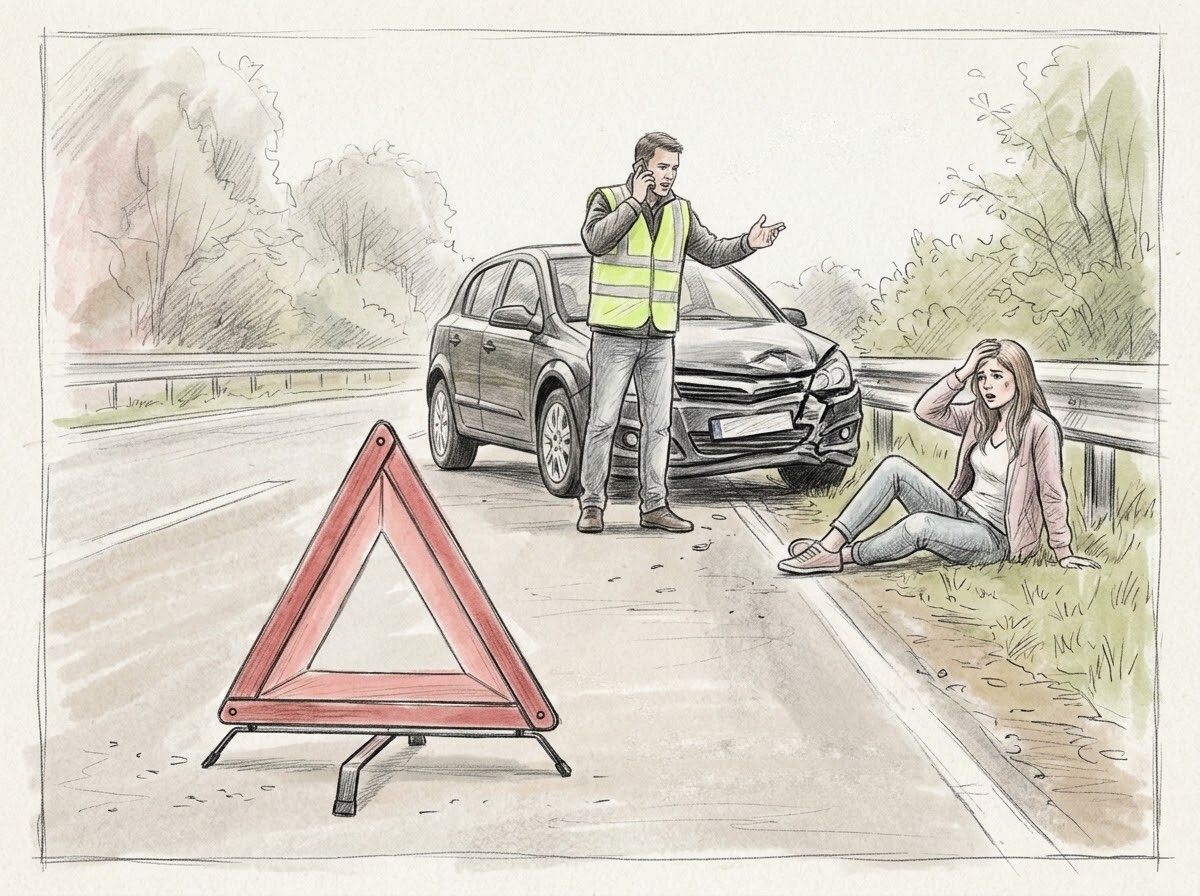
A trainer qualified in emergency medicine, polished and discreet, who shares his expertise as close as possible to your everyday life. I take only a few sessions a month and one location a day, so the day is yours.
Discretion
No names or places are ever mentioned.
Nothing is photographed, recorded or published during the session, by anyone.
You have a single contact, from the first call to the closing summary.
If you have a confidentiality agreement, I will sign it.
A bespoke session
Ten questions are enough.
A short questionnaire beforehand allows us to build each session together. They cover the place, the people taking part, the way the emergency services reach you and two situations you would like to work on. No medical information is requested or kept.
You can reply by email or go through them with me on the phone.
The ten questions, for a family
- Two possible dates and times.
- The place (house, flat, chalet, villa, yacht at the quay) and the town.
- Who will take part? (adults, teenagers, household staff, and how many)
- The ages of the children who live in or stay at the house.
- The language or languages of the session.
- The house: floors, swimming pool, fireplace, grounds.
- Access for the emergency services: gate, drive, meeting point. Access codes should not be put in writing. We will go over them on site.
- Is there a defibrillator nearby?
- Two situations you would like to work on.
- The person to reach on the day.
The ten questions, for a team
- Two possible dates and times.
- The venue: the address and the room you have in mind (a room where people can kneel).
- The number of participants and their roles.
- The language or languages of the session.
- Who do your teams receive? (families, children, elderly people, sportspeople)
- The places that matter on your premises (swimming pool, spa, kitchen, slopes, boat, remote grounds).
- Is there a defibrillator on site? Where is it?
- How do the emergency services reach you? (the address as it is given on the phone, the access routes, the meeting point)
- Two situations you would like to work on.
- The person to reach on the day.
Let's talk
The simplest way forward is to talk.
A fifteen-minute call is enough to answer your questions, go through the short questionnaire with you and settle on the format that best suits your needs. I will then send you a written proposal. When would suit you?